A Pool of Light for a Distraction Essay — Free MiniMax H3 Video Generator, No Signup Required
Table of Contents
An essay can say that attention is scattered, pulled, fragmented and stretched—and still leave the reader with nothing to picture. Adding more adjectives may not solve that particular writing problem. A concrete relationship can give the paragraph somewhere to begin.
Imagine four blank cards on a desk. A small pool of light moves from one to another and settles. All four cards remain there. The thought to explore is simple: choosing one task does not make the others disappear.
A free MiniMax H3 video generator, with no signup required, is one way to explore that idea as a five-second visual concept. The more important work comes first: deciding what the metaphor means, what it leaves out, and whether its movement says the same thing as your sentence.
The desk and cards here are original AI-created teaching illustrations. This is a writing exercise and a proposed shot, not a report of generated footage, a reader experiment or a model of the brain.
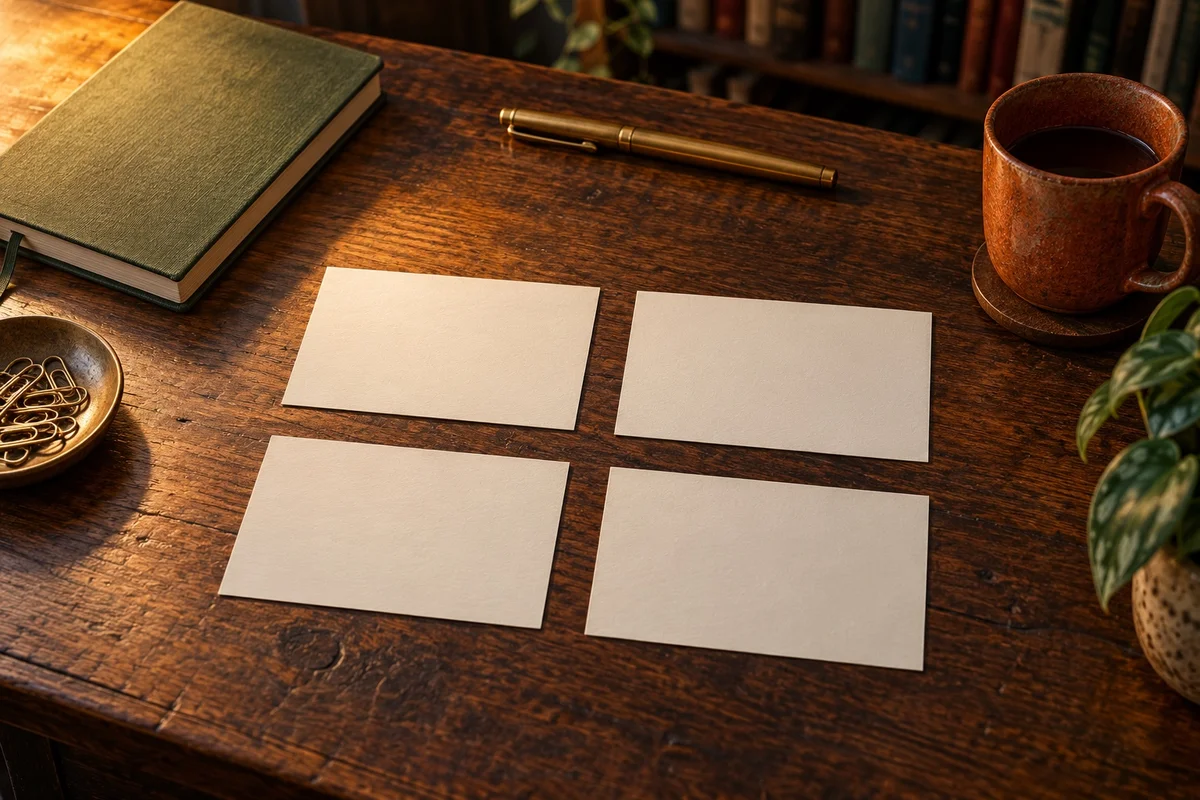
The objects for the example: four cards remain present, whether or not one receives more light. Original AI-created teaching illustration, not footage from a video-generation test.
Start with a claim small enough to draw
Take one sentence from your draft and remove its decorative language. “Modern life is an overwhelming storm of competing demands” might become: “When I choose a task, I still know the others are waiting.” Treat that as a sentence for a hypothetical essay, not an experience you have to borrow.
Now underline the relationship. One thing receives attention; the other things remain. That gives you something to arrange in a picture. Four cards can stand for four waiting tasks. The illuminated card can stand for the task currently being considered. The desk supplies a stable place for all of them.
Try this short planning note for your own draft:
- My sentence: What exactly am I trying to say?
- Visible relationship: What changes, and what remains present?
- Objects: Which few things make that relationship easy to see?
- Boundary: What must the picture not be taken to prove?
If your real point is that interruptions keep arriving, the four stationary cards may be the wrong choice. They show continued presence, not arrival. Change the metaphor before refining the shot. A beautiful desk cannot repair a mismatch between an image and an argument.
Give the metaphor a boundary
The light-and-cards scene can illustrate the coexistence of a chosen task and other waiting tasks. It does not explain why a person finds one task difficult, how attention works, or whether a particular work habit helps. It also gives an orderly appearance to something that may feel much less orderly in the essay.
Write the boundary in ordinary language. For example:
The light is a way to picture what I turn toward. It is not a diagram of how attention operates.
There is another possible reading to consider. A dark card might look forgotten, unimportant or finished. If that is not your point, keep the unlit cards visible rather than letting them vanish into blackness. The difference matters: “not my current task” and “no longer exists” are different claims.
This is where the visual starts helping the writing process. It makes you choose which relationship you actually mean. You can do that work with a sketch before generating anything.
Let the light move; leave the argument's objects in place
For this example, use a fixed view of four separate cards in two rows. Begin with the light on the upper-left card, let it travel gently toward the bottom-right card, and allow it to settle. Keep the other cards visible throughout.
There is no need for a card to slide, a cup to spill, or a camera to sweep around the room. Those actions would introduce additional meanings: tasks being removed, a crisis, a change of viewpoint. The intended movement is just a shift in illumination.
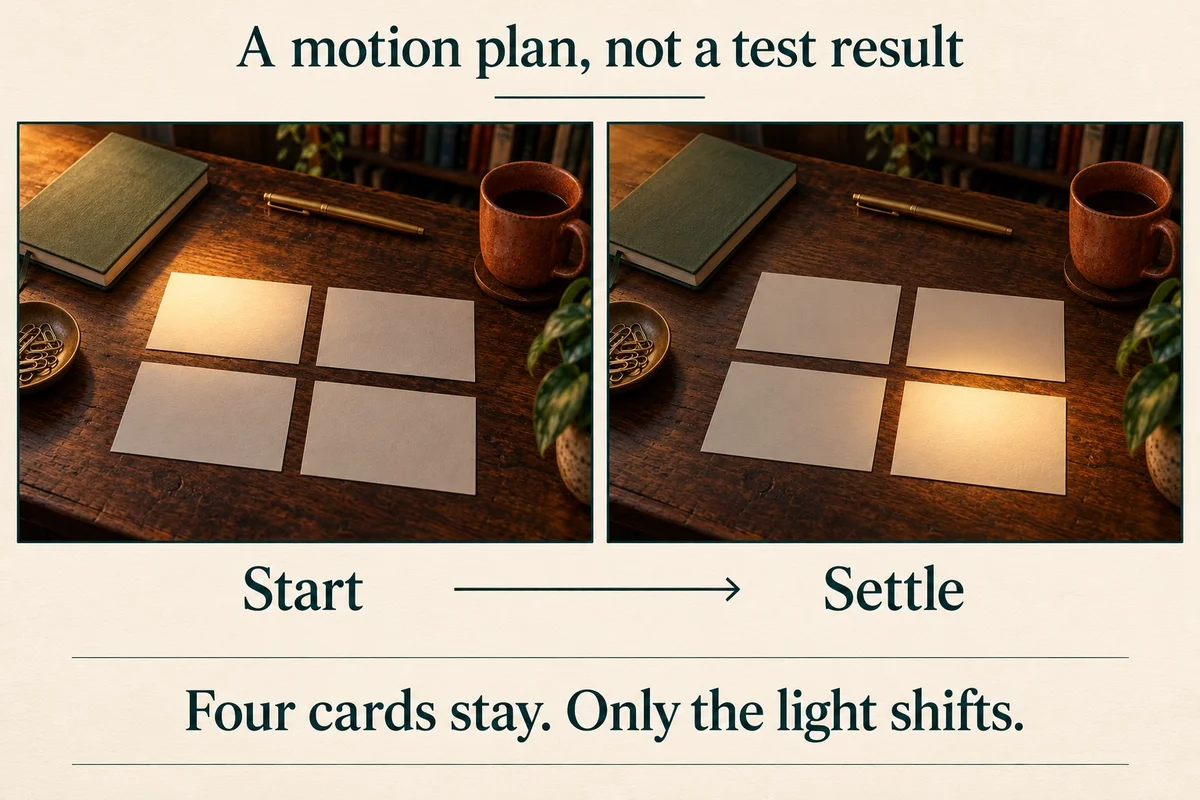
A planned change in illumination, with the desk, cards and camera staying still. These are teaching illustrations of the intended relationship, not extracted video frames or a measured comparison.
The images above are a motion plan. They show what should change and what should stay put; they are not a pair of measured results. The practical route below starts from text, so the labelled planning board is not an image you need to upload.
The useful part of video prompts is the relationship you specify. You can adapt this one:
A five-second editorial visual metaphor. Fixed high-angle view of a walnut writing desk with exactly four separate blank ivory index cards arranged in two rows. A warm, soft-edged pool of light from an off-frame source slowly shifts from the upper-left card toward the bottom-right card and settles there. All four cards remain visible, stationary and unchanged. Gentle ambient light keeps the other three readable as objects. A closed green notebook, brass pen and rust-colored cup stay still around the cards. No camera movement, hands, writing, new objects or scene transition.
The count and layout are directions to inspect afterward, not guarantees. If the image gains a fifth card or lets the other cards dissolve, the metaphor has changed even if the lighting looks attractive.
Explore the five-second concept
Tool suggestion: Max Maker AI is one option for exploring the short visual metaphor in this example.
Max Maker AI describes its free entry as making five-second clips with AI audio, without registration. The phrase “free minimax h3 video generator no signup required” refers to that access. Its unlimited and powered by minimax h3 wording describes the service and announced model; it is not an independent performance assessment here.
For this text-only exercise, leave both image fields empty, add your prompt, and choose a format that fits the intended placement. The page offers 16:9, 9:16 and 1:1. If you later choose frame-guided generation instead, the free image workflow requires both a start image and an end image.
Complete verification when prompted and follow the queue status. The site says it processes one video at a time, so unlimited does not mean unlimited concurrent jobs or no waiting. Completed clips are available in the current browser; download any version you want to keep.
Check meaning as carefully as appearance
Watch the whole clip, then pause during the movement. Count the cards, check their positions, and see whether the light arrives where you intended. Look for paper edges bending, cards merging, or shadows that make a stationary card appear to lift.
Then ask a different question: what does the scene suggest without its caption? You can ask someone what they see, without first telling them your intended lesson. Their reply is feedback on this particular illustration, not evidence that video improves comprehension.
Use a specific problem to guide a specific revision:
- The other tasks seem to disappear: retain more ambient light so all four cards remain visible.
- The scene suggests frantic switching: ask for one slow shift and a clear settling moment, rather than repeated movement.
- The viewer notices the cup instead of the cards: simplify the surrounding props or their prominence.
- The card count or layout changes: simplify the shot and inspect again; discard a version that changes the relationship.
Listen separately to any generated audio. A ticking clock or dramatic sting could suggest urgency or danger you never intended. Remove unsuitable sound in your edit, or use a still illustration if that expresses the point more clearly.
Put your sentence beside the picture
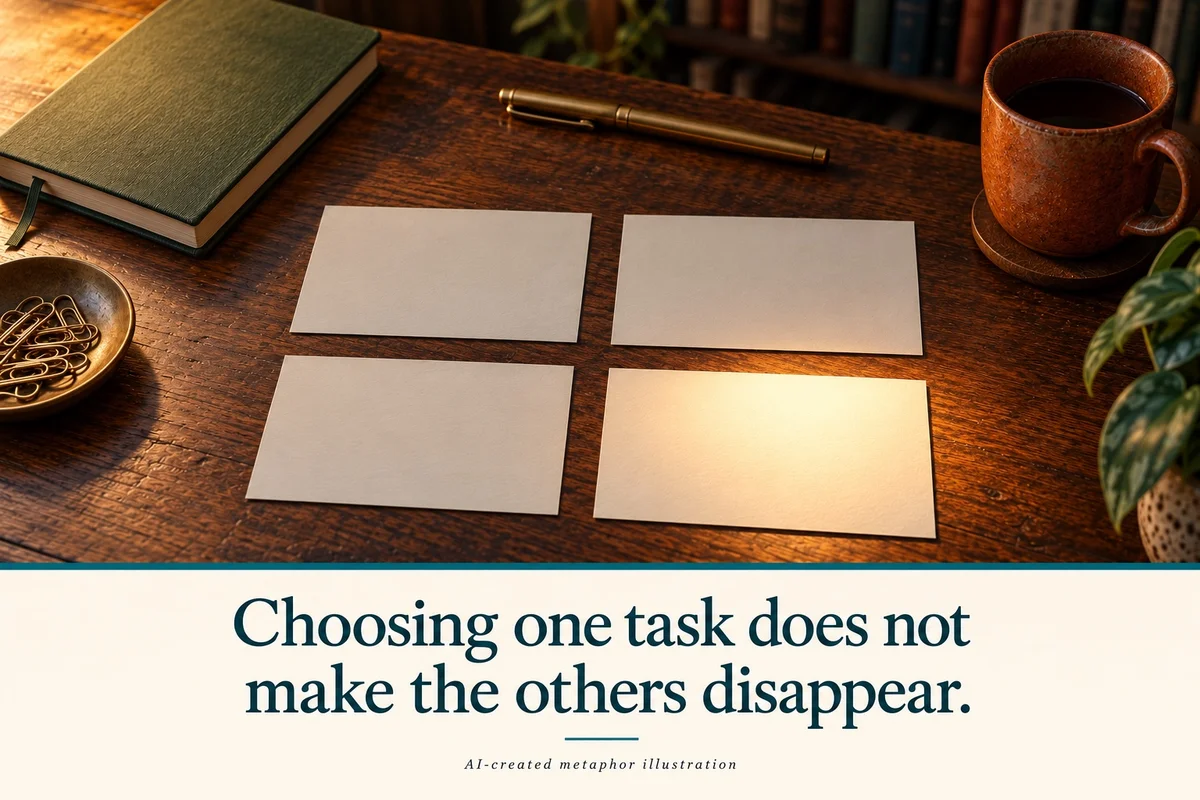
Keep the explanatory sentence outside the scene so you can revise it independently. This layout demonstrates a possible reading of the image; it does not report a reader test.
Keep the words outside the generated scene. You can edit a sentence directly; you do not need to ask the model to write it on the cards.
One possible caption is:
Choosing one task does not make the others disappear. The moving light is a metaphor for turning toward something, while the remaining cards keep their place.
Add an accurate label such as “AI-created visual metaphor” when you use an AI-made clip. Then return to the paragraph. Does the image introduce the point, clarify a relationship halfway through, or merely repeat what the prose already says? Place it where it has a job, and leave it out if the words do the work better.
The finished essay still needs your reasoning and examples. A pool of light can give one sentence a visible shape; the rest of the argument belongs on the page.