How to Illustrate a Desk Post Without Showing What’s on Your Desk
Table of Contents
Say you have written a post about the small ritual of clearing a space to write. You take a picture from the doorway. When you open it on your phone, you spot the parcel label, a note about next week and the name at the top of a chat window. Meanwhile, the little cork coaster you mention in the post barely shows up.
Start with the object that earns its place in the story. If the coaster matters because putting your cup down is how you begin, give it the frame. The desk and illustrations here are fictional examples.
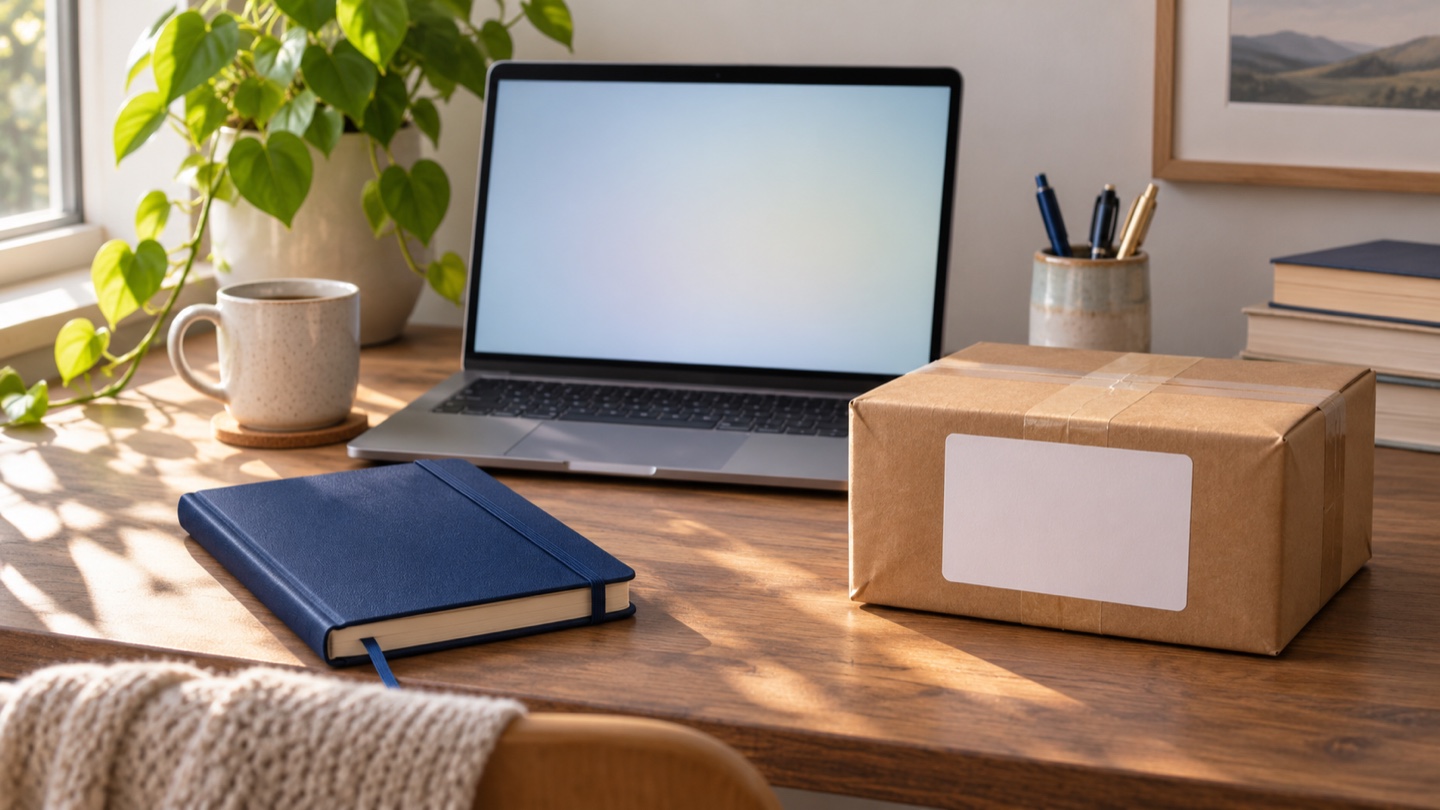
A wide desk view brings everything into the frame, including things that have little to do with the story.
Try one closer photo
Slide the coaster to a clear corner. Put the cup down as you usually would and take one photo from above or from the side. A closed notebook at the edge can suggest what happens next. Look at the saved photo at full size. Check the corners, the shiny cup and any glass in the frame for reflections of the screen or the room. If you still see writing or part of a label, move the object and take another shot.
You can also crop the photo you already took. Open the saved crop itself before you upload and check what is visible. If the crop is too small to show why the object matters, a new photo is usually quicker than editing around everything in the old one.
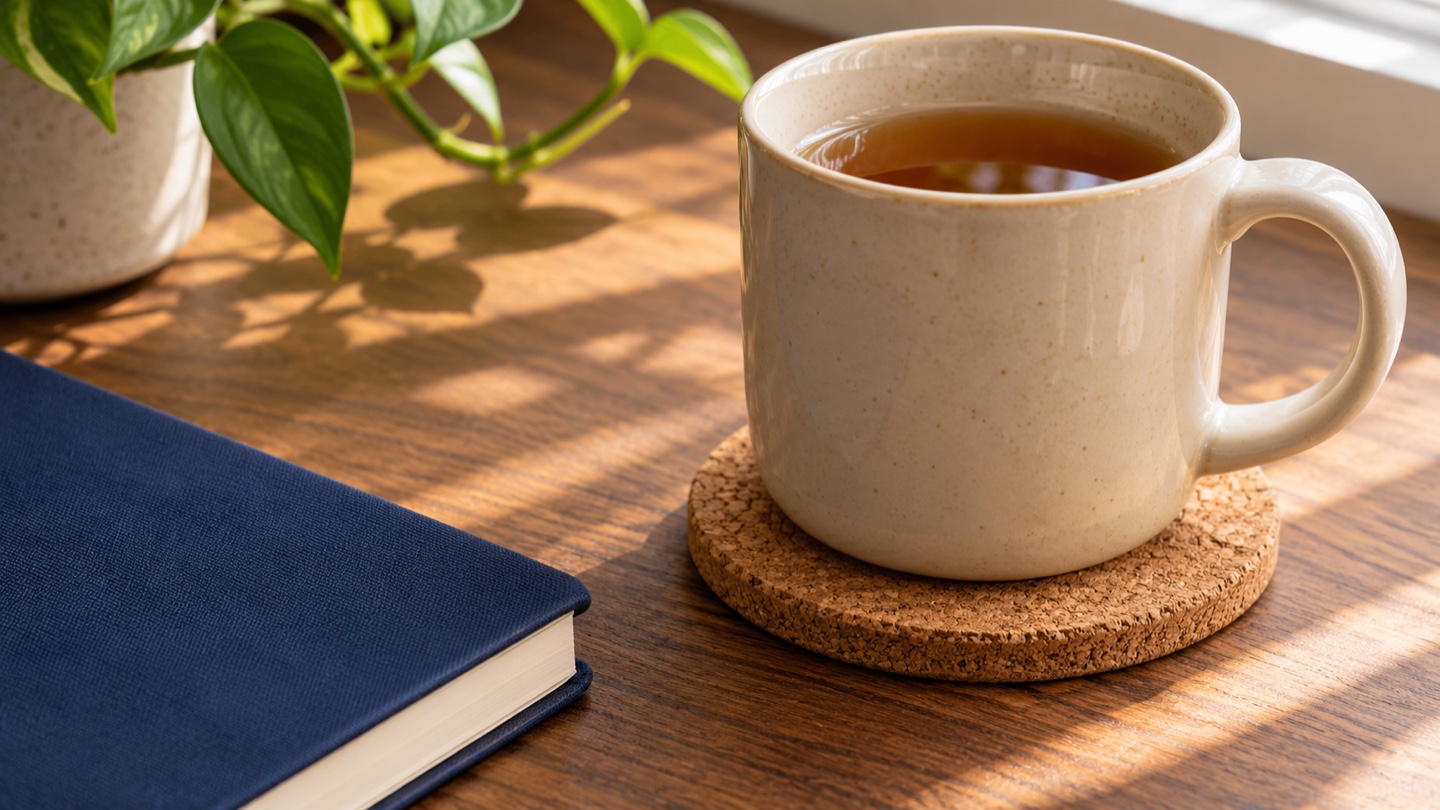
A tighter shot can give a familiar object enough room to carry the scene.
For a photo you took, a caption can be as plain as “My cork coaster, where the first cup goes before I open the notebook.” It gives the reader the detail the picture is there to show.
Make an illustration when you want to leave the room out
You may want the feeling of sitting down in a quiet room with a hot cup. You can draw it, or try Max Video AI's text-to-video generator with a description of a fictional desk. The free form displays a five-second clip at 480p. A text prompt is enough to try the scene.
A warm, pencil-textured illustration of a cup on a cork coaster beside a closed notebook. Seen from desk height. Soft side light, a fixed camera and one curl of steam. Plain surfaces, with no writing, screen or view outside.
If you only need a still, choose a frame where the objects are easy to read and check it for stray lettering. Give it a caption that fits its source, such as “AI-generated illustration of a quiet desk before writing.”
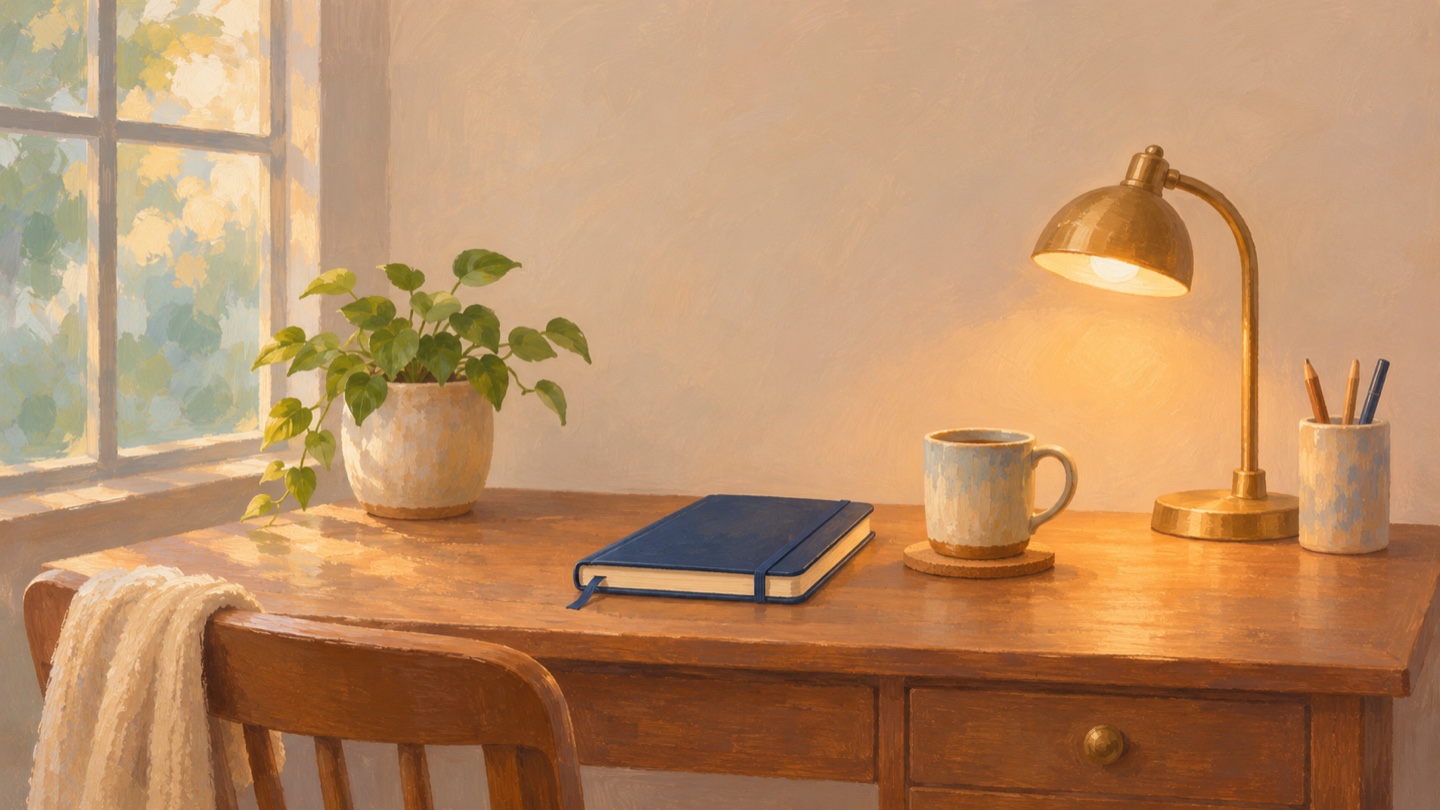
An imagined desk can carry the mood of a post when the actual room stays private.
Read the post once with the image in place. Can you tell why the coaster matters? If the sentence and the picture point to the same thing, the reader has what they need.